The landscape of artificial intelligence is continually evolving, and a significant leap forward has been made with the introduction of GPT-5.4. Released in early March 2026, this advanced model from OpenAI is not just another iteration; it marks a pivotal moment in AI’s ability to interact with the digital world. GPT-5.4 is now accessible to developers via the OpenAI API and to subscribers of ChatGPT Plus, Pro, and Enterprise tiers.
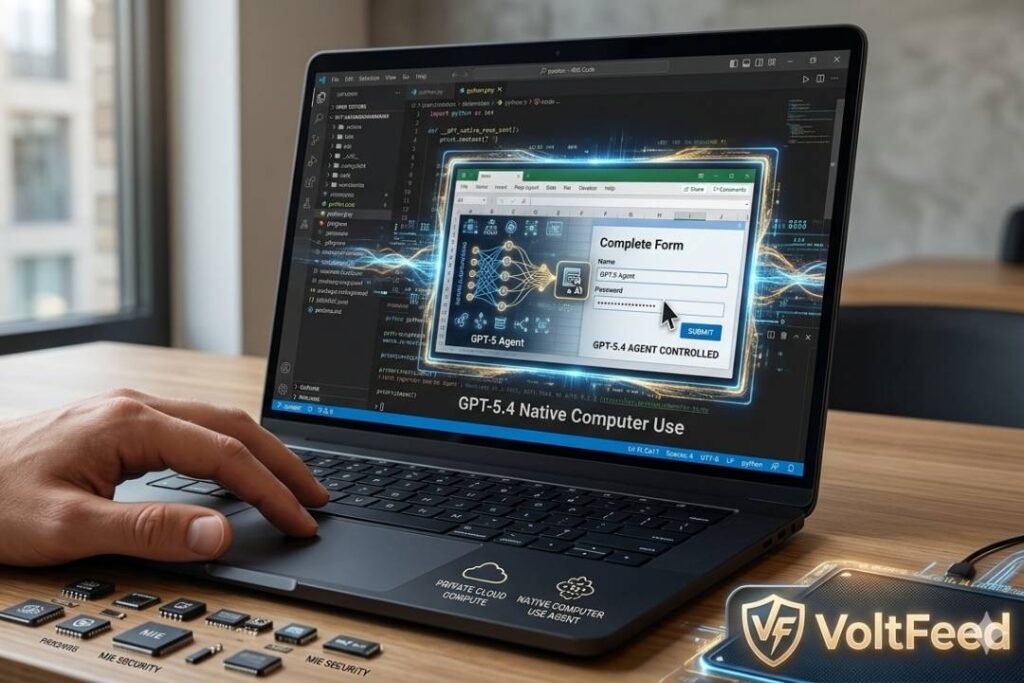
At the core of GPT-5.4’s groundbreaking capabilities is its native computer use. This refers to an AI model’s unprecedented ability to interact directly with any software through its visual interface. Unlike traditional AI systems that rely on pre-built API integrations or rigid Robotic Process Automation (RPA) scripts, GPT-5.4 operates by taking screenshots, interpreting the user interface (UI), and then issuing actions like clicking, typing, or scrolling to complete tasks. This fundamental difference means the AI can adapt to UI changes and handle unexpected situations by reasoning, much like a human operator would. This capability fundamentally redefines how we envision AI interacting with and augmenting our digital lives.
The Transformative Impact and Evolving Landscape of Autonomous AI
Evolution of AI Interaction
The journey of AI interaction has progressed significantly, moving from rudimentary, rule-based systems to sophisticated autonomous AI agents. Earlier AI models often required continuous human intervention to complete tasks, acting more as assistive tools. However, the current generation of autonomous agents, exemplified by GPT-5.4, can independently execute a series of tasks, continually learn from new information, and make decisions without constant human oversight.
GPT-5.4 further enhances this evolution with its multimodal capabilities, allowing it to process and integrate various forms of data, including text, code, and images, within the same request. This enables coordinated reasoning across different formats, leading to more comprehensive and intuitive interactions.
Key Capabilities of GPT-5.4 in Action
GPT-5.4’s native computer use underpins a suite of powerful features that are transforming how AI handles complex tasks:
- Agentic Workflows: GPT-5.4 excels at long-running, multi-step agent workflows, significantly reducing the end-to-end time required for complex tasks. It can set up its own desktop environment and autonomously use a web browser to gather information relevant to its objectives.
- Enhanced Reasoning and Accuracy: The model demonstrates improved reasoning consistency and a remarkable reduction in errors. With web search enabled, GPT-5.4’s responses are 45% less likely to contain factual errors compared to GPT-4o, and its “thinking mode” can reduce error rates by 80% compared to previous reasoning models. It also boasts a 33% reduction in factual errors compared to GPT-5.2. This improved accuracy extends to its ability to follow complex, multi-step instructions reliably.
- Developer Control and Customization: Developers gain greater control with GPT-5.4, including configurable reasoning effort and improved tool search for larger tool ecosystems. This allows for fine-tuning AI behavior based on specific workload needs.
- Real-world Applications: The practical implications of GPT-5.4’s capabilities are vast. It significantly improves performance in:
- Coding and Development: Generating production-quality code, building front-end UIs, and handling multi-file changes with fewer retries.
- Document Understanding: Analyzing complex information across various document types.
- Business Workflows: Automating tasks in customer service, analytics, and finance.
- Web Search and Synthesis: Performing agentic web searches and synthesizing information from multiple sources, especially for hard-to-locate data.
The Rise of AI-Native Operating Systems
The advent of AI models with native computer use capabilities, like GPT-5.4, paves the way for a new paradigm: the AI-native operating system (OS). Unlike traditional operating systems that merely incorporate AI features, an AI-native OS is designed from the ground up with AI as a core component, where AI can be a co-user or even the primary user of the machine.
Key characteristics of an AI-native OS include:
- Constant AI-Agent Interaction: Designed for continuous interaction with autonomous AI agents.
- Contextual Memory: Maintains memory across different applications and processes, understanding the user’s ongoing work.
- Semantic Interfaces: Moves beyond visual or command-line interfaces to understand user intent semantically.
- Deep Integration: Features deep integration with language models, perception engines, and feedback loops.
This shift means that the experience of computing will transition from episodic interactions with devices to a continuous collaboration with an intelligent digital infrastructure. Users will interact with an intelligent environment that responds to voice commands, contextual cues, and gestures, with AI agents managing communications, scheduling, and information retrieval across various devices.