We are standing at the precipice of a new technological era, one where our digital lives are no longer confined to the screens in our hands but are seamlessly integrated into our very perception of reality. This future is being shaped by AI Smart Glasses, wearable devices that blend artificial intelligence with conventional eyewear, offering us hands-free information and assistance that significantly reduces our reliance on smartphones.
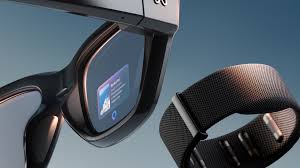
Unlike their earlier “smart glass” predecessors, which often focused on augmented reality (AR) overlays or simple camera functions, today’s AI Smart Glasses prioritize practical, AI-driven features. The emphasis has shifted from merely “what can we show?” to “how can we help?”, aiming to provide immediate, hands-free access to digital information and functions without disrupting our engagement with the physical world.
This revolutionary shift is rapidly gaining momentum, with the global AI Smart Glasses market valued at USD 540 million in 2025 and projected to soar to USD 3,481 million by 2034, demonstrating a robust compound annual growth rate (CAGR) of 34.3%. In fact, global shipments of AI Smart Glasses surged by an impressive 322% year-over-year in 2025, reaching 8.7 million units, and accounted for a dominant 88% of all smart glasses shipments in the latter half of that year.
The Power of Perception: Features and Applications
The true marvel of AI Smart Glasses lies in their ability to augment our perception and interactions with the world around us. This is made possible by a sophisticated blend of hardware and intelligent software.
Core Technologies at Play
At their heart, AI Smart Glasses are miniature computing powerhouses, equipped with a suite of advanced components:
- Sensors: These devices are packed with high-resolution cameras, microphones, inertial measurement units (IMUs) containing accelerometers and gyroscopes, depth sensors, and sometimes even LiDAR scanners. This array acts as the “eyes and ears” of the device, constantly capturing a rich stream of environmental data.
- AI Engine: The raw data collected by sensors is interpreted by a dedicated, on-device AI processing chip, often referred to as a Neural Processing Unit (NPU). This NPU efficiently runs complex machine learning models, processing visual and auditory data in real-time with minimal latency. This local processing is crucial for both responsiveness and user privacy.
- Displays: Most AI Smart Glasses utilize a heads-up display (HUD) that projects text and simple graphics directly into our field of view. Some innovative designs, like the Halliday glasses, use a micro display module to project an “invisible DigiWindow” to avoid light leakage.
- Connectivity: Seamless connectivity is maintained through Bluetooth, Wi-Fi, and in some cases, cellular data, allowing the glasses to link with smartphones and the internet.
Transformative Features
The integration of these technologies unlocks a wealth of features designed to enhance our daily lives:
- Real-time Language Translation: One of the most powerful applications, AI Smart Glasses can provide live captions of foreign language conversations or instantly translate signs, menus, and documents as we look at them, effectively dissolving language barriers.
- AI Models and Assistants: Acting as a personal assistant, the built-in AI can understand context, process voice commands, and offer intelligent assistance. We can use a few words to make calls, send texts, control features, or find answers to questions that pop into our heads.
- Navigation Made Simple: Forget constantly looking down at a phone for directions. AI Smart Glasses can overlay turn-by-turn arrows and directions directly onto our real-world path, making navigation intuitive and hands-free.
- Hands-Free Photos & Video: We can capture everyday moments effortlessly, recording videos while cycling, walking, or traveling without needing to pull out a phone. Some models even offer livestreaming capabilities.
- Smart Notifications: These glasses act as a sophisticated satellite for our smartphones, intelligently filtering and prioritizing alerts, projecting only the most crucial information into our visual field in a non-intrusive way.
- Awareness Capabilities: By combining information from our eye movements with what the scene camera captures, the glasses can understand what we’re looking at, recognize faces, track moving objects, detect hand gestures, and analyze the visual scene.
- Health Monitoring: Equipped with advanced sensors, AI Smart Glasses can continuously track body functions like heart rate and activity level, providing real-time health data and recommendations.
Diverse Applications
The practical applications of AI Smart Glasses span numerous sectors:
- Accessibility: For individuals who are visually impaired or blind, AI Smart Glasses can function like a virtual guide dog, providing audio cues and vibration feedback to detect hazards, read text aloud, identify colors, currency, and even recognize familiar faces.
- Healthcare: In medical settings, these glasses are proving invaluable. They can assist surgeons during procedures by displaying health information, facilitate comprehensive health monitoring, and enable coordinated patient care. A 2024 study even demonstrated that AI-powered smart glasses could reduce medication errors in operating rooms with an impressive 99.6% accuracy rate in detecting drug-swapping mistakes.
- Productivity & Enterprise: Professionals can benefit immensely. Field technicians can have schematics and instruction manuals displayed in their line of sight, while warehouse workers can receive picking and packing information hands-free, significantly improving efficiency. They also facilitate remote expert assistance, allowing specialists to guide on-site workers.
- Education: Students can leverage AI Smart Glasses to get definitions, summaries, explanations of new topics, or even examine 3D models of cells or organs for detailed study.
- Content Creation & Lifestyle: On a consumer level, they serve as a discreet tool for capturing life’s moments through first-person photography and videography. They can also manage personal reminders and control smart home devices with simple voice commands.
Navigating the Future: Challenges, Privacy, and Evolution
While the potential of AI Smart Glasses is undeniable, their widespread adoption and seamless integration into our lives hinge on overcoming several significant challenges, particularly concerning privacy and societal acceptance.
Technical Hurdles and Design Evolution
- Battery Life: A critical factor for all-day usability, battery life continues to be a key consideration. However, advancements in AI chips are leading to more efficient data processing and improved performance, contributing to longer battery life.
- Comfort and Aesthetics: For true mainstream adoption, AI Smart Glasses must be lightweight, comfortable for extended wear, and aesthetically pleasing, ideally becoming indistinguishable from regular eyewear.
- Prescription Compatibility: Ensuring compatibility with prescription lenses is also a crucial aspect for a significant portion of the population.
The Looming Shadow of Privacy
The integration of cameras and microphones into everyday eyewear introduces complex privacy concerns that demand careful consideration.
- Recording Without Consent: AI Smart Glasses equipped with cameras and microphones raise the specter of covert recording and identification of individuals using facial recognition. Unlike visible smartphone cameras, smart glasses can break the “social contract” of recognizable consent, leading to instances of unauthorized filming in public spaces, gyms, and even private environments.
- Data Collection and AI Training: A significant concern is how the data—including voice recordings, photos, and videos—is collected, stored, and used to train and improve AI models. Recent investigations have revealed that human contractors review private footage, some of which is extremely sensitive, for data annotation purposes. Users may not be able to fully opt out of this data processing if they wish to use the AI features.
- Biometric Data: The collection of biometric data, such as facial recognition and voiceprints, implicates various privacy laws like the Illinois Biometric Information Privacy Act (BIPA) and Europe’s GDPR.
- Security Risks: The technology also presents security risks, such as the potential for misuse in activities like cheating in poker by streaming video to a third party for real-time advice.
- Mitigation Limitations: While most commercially available smart glasses include a visible LED light to indicate active recording, this is often subtle and may not be sufficient as legal notice, nor does it prevent all unauthorized filming.
The Path Forward: Ambient AI and Beyond
Despite the challenges, the trajectory for AI Smart Glasses points towards an increasingly integrated and intuitive future.
- Ambient AI: The goal is to deliver relevant information at precisely the right moment with minimal intrusion, allowing us to interact with our digital world without being constantly pulled into a screen. This concept is often described as “less screen, more scene,” where reality itself becomes the interface.
- Smartphone Evolution: Many experts believe AI Smart Glasses represent the next major computing platform, with the potential to eventually replace smartphones as our primary interface to the digital world. The smartphone may evolve into a secondary hub or processing unit as glasses become our main window to digital information.
- Metaverse Gateway: AI Smart Glasses are also considered the most likely hardware candidate to serve as a gateway to the metaverse, enabling us to interact with persistent digital objects and information anchored in our physical environments.
- Market Growth and Competition: Major technology companies like Meta (with its Ray-Ban collaboration), Google (with its Gemini AI glasses), Snap, Xreal, Rokid, Xiaomi, Apple, and Samsung are all investing heavily in this space, driving innovation and expanding market reach.
Frequently Asked Questions (FAQs)
- What are AI Smart Glasses?AI Smart Glasses are wearable devices that integrate artificial intelligence into standard eyewear, providing hands-free access to digital information and assistance directly in our field of vision or through audio.
- How do AI Smart Glasses differ from traditional smart glasses? The key differentiator is the integration of an active AI engine. While traditional smart glasses might offer basic functions like cameras or audio, AI Smart Glasses have onboard AI that understands context, processes voice commands, and provides intelligent, proactive assistance.
- What are some practical applications of AI Smart Glasses? Practical applications include real-time language translation, hands-free navigation, intelligent notifications, accessibility features for the visually impaired (like reading text aloud and describing surroundings), healthcare assistance (e.g., reducing medication errors in surgery), and enhanced productivity in professional settings.
- What are the main privacy concerns with AI Smart Glasses? Primary concerns revolve around covert recording of individuals without consent, the extensive collection and use of personal and biometric data (including for AI training purposes), and the potential for sensitive footage to be reviewed by human contractors.
- Will AI Smart Glasses replace smartphones? While not an immediate replacement, AI Smart Glasses are evolving as a major computing platform, offering a more natural and hands-free interface. Many experts believe they could eventually become our primary window to the digital world, with smartphones potentially serving as secondary hubs.
Conclusion: Embracing an Augmented Tomorrow
AI Smart Glasses are more than just a new gadget; they represent a fundamental shift in how we interact with technology and the world. They promise a future where information is seamlessly integrated into our reality, enhancing our capabilities, breaking down barriers, and making our daily lives more efficient and informed. As we navigate this augmented tomorrow, it is crucial that we, as a society, balance the immense innovative potential of AI Smart Glasses with a thoughtful approach to privacy, ethical usage, and the evolution of social norms. By doing so, we can ensure that these powerful wearable technologies truly serve to enrich our human experience.