The MacBook Air has long been celebrated as the quintessential blend of portability, power, and elegant design, making it a favorite among students, professionals, and everyday users alike. With each iteration, Apple pushes the boundaries of what a thin and light laptop can achieve, and the introduction of the M5 MacBook Air is no exception. This latest release marks a significant leap forward, primarily focusing on enhanced performance, advanced artificial intelligence capabilities, and refined core features that solidify its position in the competitive laptop market. We are witnessing not just an upgrade, but a clear vision for the future of mobile computing.
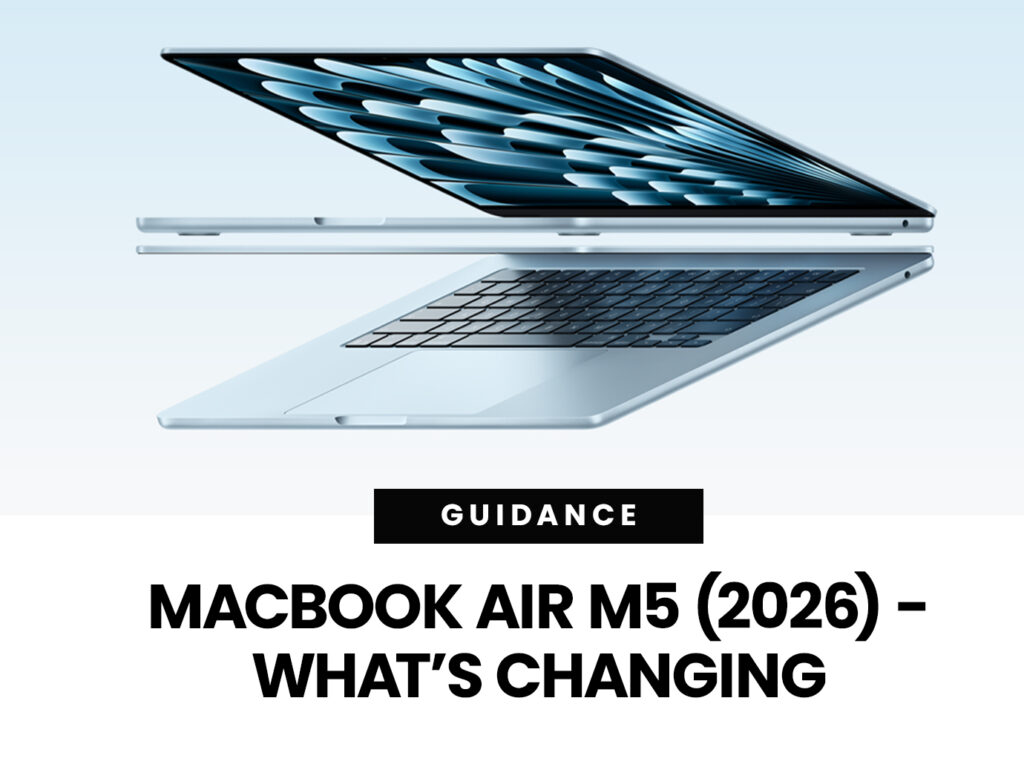
M5 MacBook Air: A New Era of Performance and Intelligence
At the heart of the new M5 MacBook Air lies the formidable Apple M5 chip, representing the next generation of Apple silicon. Announced on March 3, 2026, with pre-orders beginning March 4, and general availability starting March 11, 2026, this chip ushers in a new era of speed and efficiency. The M5 chip is built on third-generation 3-nanometer technology, offering substantial improvements over its predecessor, the M4.
The M5 MacBook Air features up to a 10-core CPU, comprising up to four “super cores” and six efficiency cores. This configuration delivers up to 15% faster multithreaded performance compared to the M4 chip. Benchmark tests have shown the M5 chip to be approximately 9-10% faster in single-core CPU performance and 19% faster in multi-core CPU performance than the M4.
However, where the M5 truly shines is in its graphics and AI capabilities. It boasts an up to 10-core GPU that delivers up to 30% faster performance than the M4. Crucially, each GPU core now integrates a Neural Accelerator, specifically designed to boost GPU-based AI workloads. This enhancement translates to over four times faster peak GPU compute performance for AI tasks compared to the M4, marking a “big leap” in AI performance. The updated 16-core Neural Engine is also more energy-efficient, potentially contributing to improved battery life.
The unified memory architecture has also seen a significant upgrade, with bandwidth increasing to 153GB/s—a nearly 30% improvement over the M4’s memory bandwidth. This enhancement facilitates smoother multitasking and faster application launches. Users will find RAM starting at 16GB, with options to upgrade to 24GB or 32GB.
For tasks demanding intense graphical prowess, the M5 chip incorporates third-generation ray-tracing, second-generation dynamic caching, and enhanced shader cores, which collectively bring notable improvements to gaming and other system-intensive applications. Real-world performance gains include up to 6.9 times faster AI video enhancement in Topaz Video when compared to an M1 MacBook Air, and up to 1.9 times faster than an M4 MacBook Air.
Enhanced Design, Display, and Core Features
While the internal architecture has received a substantial overhaul, the M5 MacBook Air largely retains its beloved exterior. We see the continuation of the beautifully thin, light, and durable aluminum unibody design that was introduced with the M2 model. This means no major design changes in this generation.
The M5 MacBook Air is available in both 13-inch and 15-inch models. Users can choose from a palette of four sophisticated finishes: Sky Blue, Midnight, Starlight, and Silver. Notably, Sky Blue was introduced with the M4 MacBook Air, replacing the Space Gray option.
The display remains a stunning Liquid Retina display. The 13-inch model features a 13.6-inch screen with a resolution of 2560 by 1664 pixels, while the 15-inch model boasts a 15.3-inch display with 2880 by 1864 pixels. While an OLED display is rumored for future MacBook Pro models, it is not present in this iteration of the MacBook Air.
Key features that carry over and enhance the user experience include:
- A 12MP Center Stage camera, ensuring clear and engaging video calls.
- An immersive sound system with Spatial Audio.
- Up to 18 hours of battery life, providing all-day power for most users.
- Connectivity is significantly upgraded with Apple’s new N1 wireless chip, bringing support for Wi-Fi 7 and Bluetooth 6 for seamless and faster wireless interactions.
- For physical connections, the M5 MacBook Air includes two Thunderbolt 4/USB-C ports, a MagSafe charging port, and a 3.5mm headphone jack.
A notable improvement in the M5 MacBook Air is the increased base storage. It now starts with 512GB of SSD storage, double that of the previous M4 generation, and is configurable up to a generous 4TB. Apple also states that the new SSD technology delivers up to two times faster read/write performance compared to the prior generation.
Pricing, Availability, and the Upgrade Question
The M5 MacBook Air was officially announced on March 3, 2026, with pre-orders commencing on March 4, 2026, and general availability in stores beginning March 11, 2026.
Pricing for the new models is as follows:
- The 13-inch M5 MacBook Air starts at $1,099 (U.S.), with an education price of $999 (U.S.).
- The 15-inch M5 MacBook Air starts at $1,299 (U.S.), with an education price of $1,199 (U.S.).
It’s worth noting that while the starting price for the 13-inch model is $100 higher than the M4 MacBook Air’s launch price, the base configuration now includes 512GB of storage, effectively offering a $100 discount compared to an M4 Air with the same storage capacity. This strategic pricing, combined with the removal of the 256GB base configuration, also makes room for Apple’s rumored low-cost MacBook Neo.
For existing MacBook Air users, the upgrade question hinges on their current model and usage. For those with older Intel-based Macs or even M1 models, the performance and AI enhancements of the M5 chip will be a significant leap. Users of M3 or M4 MacBook Airs, however, might find the upgrade more incremental, primarily benefiting from the substantial AI and GPU performance boosts, faster unified memory, and enhanced connectivity. The doubled base storage is also a compelling factor for many.
Frequently Asked Questions (FAQ)
When was the M5 MacBook Air released?
The M5 MacBook Air was announced on March 3, 2026, with pre-orders beginning March 4, and general availability starting March 11, 2026.
What are the key performance improvements of the M5 chip over the M4?
The M5 chip offers up to 15% faster multithreaded CPU performance and up to 30% faster GPU performance compared to the M4. It also provides over four times faster peak GPU compute performance for AI tasks due to Neural Accelerators in each core, and nearly 30% faster unified memory bandwidth.
Has the design of the MacBook Air changed with the M5 update?
No, the M5 MacBook Air retains the same thin, light, and durable aluminum unibody design as previous M2, M3, and M4 models.
Does the M5 MacBook Air have an OLED display?
No, the M5 MacBook Air continues to feature a Liquid Retina display. OLED displays are rumored for future MacBook Pro models.
What are the new connectivity features?
The M5 MacBook Air includes Apple’s N1 wireless chip, which brings support for Wi-Fi 7 and Bluetooth 6.
What is the starting storage capacity for the M5 MacBook Air?
The M5 MacBook Air now starts with 512GB of SSD storage, which is double the starting storage of the previous M4 generation.
Conclusion: The M5 MacBook Air’s Place in the Apple Ecosystem
The M5 MacBook Air solidifies its position as a leading choice for users seeking a powerful yet portable laptop. With the introduction of the advanced M5 chip, Apple has not only delivered significant performance enhancements across CPU and GPU tasks but has also made a profound commitment to on-device artificial intelligence. The integrated Neural Accelerators and faster Neural Engine position the M5 MacBook Air as a highly capable machine for the growing demands of AI-driven workflows.
While the exterior design remains familiar, the internal advancements, including doubled base storage, faster SSD technology, and cutting-edge Wi-Fi 7 and Bluetooth 6 connectivity, make this an incredibly compelling package. The M5 MacBook Air, running on macOS Tahoe and leveraging Apple Intelligence, is more than just an incremental update; it’s a testament to Apple’s continuous innovation, offering a powerful, intelligent, and highly efficient computing experience for a broad audience. Whether for everyday productivity, creative endeavors, or the burgeoning field of AI applications, the M5 MacBook Air is poised to be a cornerstone of the Apple ecosystem for years to come.