The landscape of robotics is undergoing a profound transformation, driven by advancements in artificial intelligence. In March 2025, Google DeepMind introduced Google Gemini Robotics, a groundbreaking initiative poised to revolutionize how robots interact with humans and the physical world. Unlike traditional industrial robots, which often operate in static, pre-programmed environments and are enclosed for safety, Gemini Robotics aims to create generalist robots capable of perceiving, adapting, and interacting dynamically with their surroundings. This shift from rigidly defined tasks to adaptable, intelligent behavior marks a significant leap towards truly helpful and versatile robotic systems in both industrial and domestic settings.
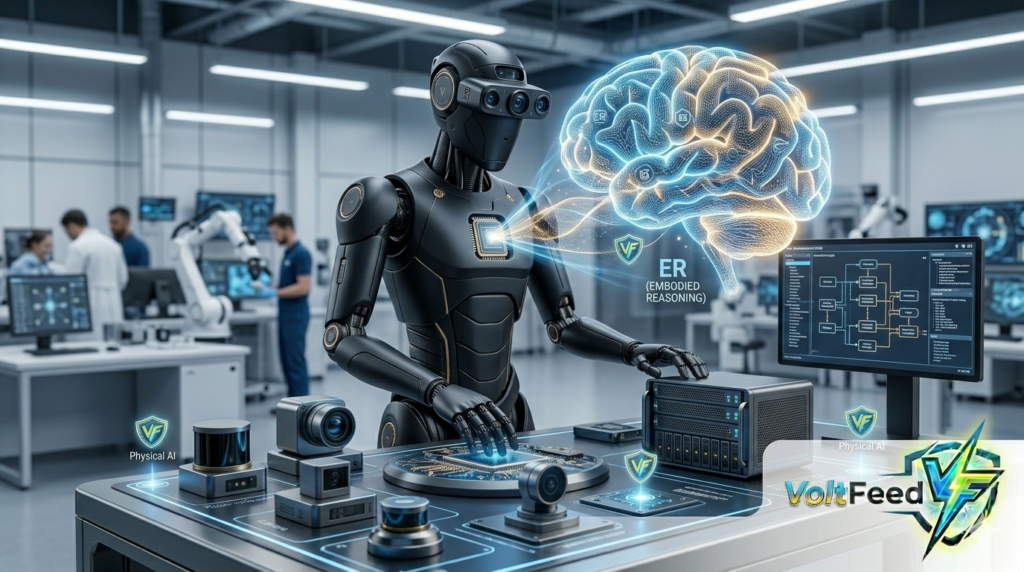
The Core of Innovation: Google Gemini Robotics Models
At the heart of this revolution are the sophisticated AI models developed by Google DeepMind, building upon the multimodal capabilities of Gemini 2.0. The Google Gemini Robotics initiative primarily features two key models designed to bring advanced AI into the physical realm:
- Gemini Robotics: This is the general AI model for robotics, extending the foundation model’s multimodal capabilities (text, vision, and audio) by adding robotic control as a new output. It functions as a Vision-Language-Action (VLA) model, translating visual information and instructions into precise motor commands that directly control robotic systems in real-world environments. The latest iteration, Gemini Robotics 1.5, is designed to turn visual input and instructions into these motor commands, enabling robots to perform tasks effectively.
- Gemini Robotics-ER (Embodied Reasoning): This specialized model focuses on embodied reasoning and spatial understanding, working in conjunction with or enhancing the Gemini Robotics model. Gemini Robotics-ER 1.5, the state-of-the-art embodied reasoning model, excels at understanding physical spaces, planning multi-step complex tasks, and making logical decisions within its surroundings. It can orchestrate a robot’s activities, act as a high-level brain, and even call digital tools like Google Search to gather information, before providing natural language instructions to Gemini Robotics for execution.
These models represent a significant departure from previous approaches, which often required extensive, task-specific programming and struggled to generalize to new situations. By leveraging the broad world knowledge embedded within the Gemini foundation, Google Gemini Robotics models require less data to learn new abilities and can adapt to novel challenges with minimal effort. Google DeepMind is also developing Gemini Robotics On-Device, an iteration optimized to run locally on robotic devices, further enhancing adaptability for developers.
Unlocking New Capabilities: Generality, Dexterity, and Intelligence
Google Gemini Robotics is defined by three core capabilities: generality, interactivity, and dexterity, all underpinned by enhanced intelligence.
- Generality: This refers to a robot’s ability to adapt to new and unforeseen situations, handling novel objects, diverse instructions, and unfamiliar environments without explicit reprogramming. Gemini Robotics leverages Gemini’s extensive world knowledge, enabling robots to move beyond highly specific, pre-programmed tasks. In technical evaluations, it has shown to more than double performance on comprehensive generalization benchmarks compared to other leading vision-language-action models. This means a robot trained to stack blocks can now arrange items in a fridge, a task it never encountered during training, by harnessing the broad reasoning capabilities of Gemini 2.0.
- Interactivity: Robots powered by Gemini Robotics can understand and respond to everyday, conversational language, even in multiple languages. They can react to sudden changes in instructions or their environment, and autonomously replan actions if an object is dropped or moved, often continuing tasks without needing further input. This real-time adaptability is crucial for robots to be truly useful in dynamic, human-centric environments.
- Dexterity: Many tasks humans perform effortlessly require surprisingly fine motor skills, which have historically been challenging for robots. Gemini Robotics demonstrates significant advancements in this area, enabling robots to perform complex tasks requiring precise manipulation. Examples include folding origami, packing a lunch box, preparing a salad, picking fruits and snacks, placing glasses in cases, and even tying shoelaces. This sets a new state-of-the-art for dexterity, allowing robots to tackle multi-step tasks with smooth motions and impressive completion times.
The underlying intelligence for these capabilities comes from the models’ ability to perceive, reason, and act. Gemini Robotics-ER 1.5 excels at spatial understanding, allowing robots to interpret complex visual data, track objects in 2D and 3D, predict trajectories, and determine optimal grasps based on object shape and function. This enables robots to “think before acting,” improving the quality and transparency of their decisions. Furthermore, Google Gemini Robotics models are designed for multiple embodiments, capable of adapting to diverse robot forms, from bi-arm static platforms to humanoid robots like Apptronik’s Apollo, accelerating learning across different physical designs.
Transformative Applications and Societal Impact
The advancements brought by Google Gemini Robotics open a vast array of real-world applications across numerous industries and aspects of daily life.
- Industrial and Business Automation: We anticipate significant improvements in industrial efficiency and business automation. Robots will be more capable in warehouse automation, logistics, and manufacturing, adapting quickly to evolving production cycles and sharing workspaces safely with other robots and humans. Google DeepMind is already partnering with Apptronik to integrate Gemini Robotics into their Apollo humanoid robot for logistics automation.
- Home and Personal Assistance: The potential for personal assistance and home automation is immense. Robots could assist with everyday household chores like meal preparation, packing lunch boxes, and general home assistance. This could lead to a new generation of helpful robotic assistants in our homes.
- Healthcare and Elder Care: Google Gemini Robotics could play a crucial role in healthcare and elder care, providing support for medical professionals, assisting in surgeries, and offering companionship and personalized care to patients, particularly the isolated or elderly. Social robots, enhanced by AI, can interpret emotions and provide therapeutic support, improving mental well-being.
The societal impact of Google Gemini Robotics is multifaceted. It promises to create safer and more versatile robots that can operate in dynamic environments, reducing the need for safety cages typically found around traditional industrial robots. This technology could drive economic opportunity by bolstering efficiency and creating new roles, though it also raises important considerations about job displacement and the changing nature of work, which require proactive attention.
Google DeepMind emphasizes a comprehensive approach to safety, integrating AI Principles and incorporating semantic safety checks, bias detection, and constitutional AI frameworks to ensure responsible development and deployment. Collaborations with experts, policymakers, and internal review groups are crucial for navigating the ethical challenges and ensuring that Google Gemini Robotics benefits humanity.
Frequently Asked Questions (FAQ)
- What is Google Gemini Robotics?Google Gemini Robotics is an initiative by Google DeepMind that integrates advanced AI models, built on Gemini 2.0, into robotic systems. It enables robots to perceive, reason, understand natural language, and perform complex physical actions in dynamic real-world environments.
- How does Gemini Robotics differ from traditional robot programming? Traditional robots are often programmed for highly specific tasks in static environments. Gemini Robotics, in contrast, creates generalist robots that can adapt to new situations, understand diverse instructions, and perform tasks they haven’t been explicitly trained for, thanks to its multimodal reasoning and embodied intelligence.
- What are the key capabilities of Gemini Robotics? The core capabilities include generality (adapting to new situations), interactivity (understanding natural language and responding to changes), and dexterity (performing complex fine motor tasks). It also features advanced embodied reasoning for spatial understanding and planning.
- What types of robots can use Gemini Robotics?Gemini Robotics is designed to be adaptable to a diverse array of robot forms, including bi-arm static robotic platforms and humanoid robots like Apptronik’s Apollo.
- What are some potential applications? Potential applications are vast, spanning industrial automation, logistics, home assistance, elder care, medical assistance, and various forms of personal assistance that require adaptable, intelligent physical interaction.
Conclusion: The Future of Intelligent Physical AI
Google Gemini Robotics represents a pivotal moment in the evolution of AI and robotics. By empowering robots with unprecedented levels of generality, interactivity, and dexterity, coupled with advanced embodied reasoning, we are moving closer to a future where intelligent physical AI can seamlessly integrate into our lives and workplaces. This technology promises to transform industries, enhance our daily routines, and provide valuable assistance in critical sectors like healthcare. As we continue to advance these capabilities responsibly, with a strong focus on safety and ethical considerations, Google Gemini Robotics is laying a foundational step towards solving Artificial General Intelligence (AGI) in the physical world, promising a future where robots are not just tools, but truly helpful and intelligent partners.