In an increasingly interconnected world, reliable communication remains a cornerstone of modern life. Yet, vast stretches of our planet still lack conventional cellular coverage, leaving individuals vulnerable or isolated. Xiaomi, a global technology leader, has been at the forefront of addressing this challenge by integrating advanced satellite communication technology into its premium smartphone lineup. This strategic move began with earlier Ultra models and is poised to reach new heights with the anticipated Xiaomi 16 Ultra Satellite Tech, promising to redefine how we stay connected, regardless of location. We’ve seen a clear trajectory from Xiaomi’s initial foray into satellite capabilities, and the upcoming 16 Ultra is expected to push these boundaries even further, ensuring ubiquitous and reliable connectivity for its users.
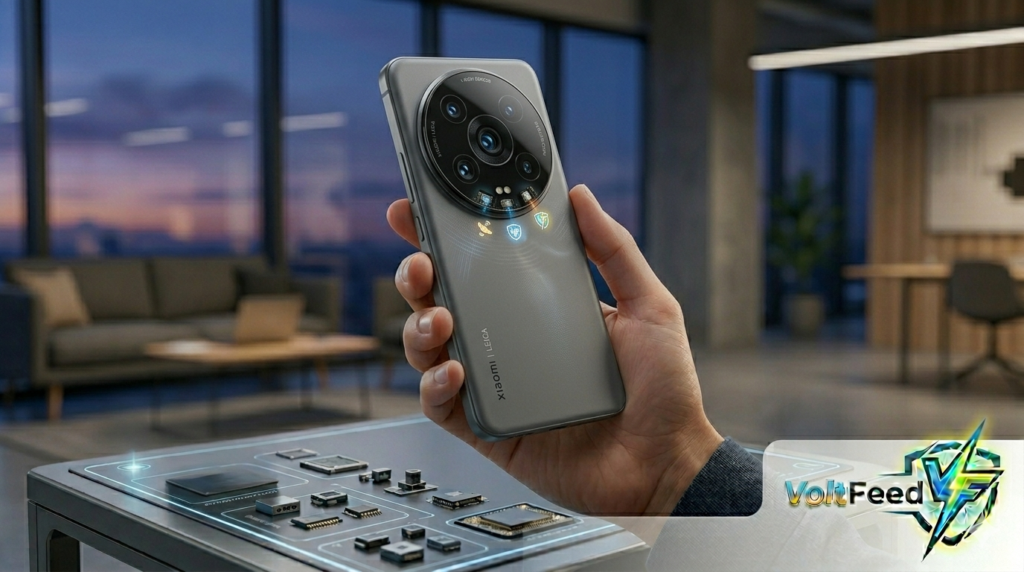
Understanding Xiaomi’s Advanced Satellite Communication Technology
Xiaomi’s journey into satellite communication has been marked by significant innovation, moving beyond basic emergency messaging to comprehensive two-way communication. This advanced capability allows users to make voice calls, send text messages, and share their location even in areas completely devoid of traditional cellular networks.
- Pioneering with the Xiaomi 14 Ultra: The foundation for Xiaomi’s satellite ambitions was firmly established with the Xiaomi 14 Ultra, released in February 2024. This device notably supported two-way satellite communication, leveraging China’s geosynchronous orbit satellite, “Tiantong.” It was equipped with a proprietary signal enhancement chip, a testament to Xiaomi’s commitment to overcoming the technical hurdles of integrating satellite connectivity into a compact smartphone form factor. While initially focusing on the Chinese market, it demonstrated the feasibility and potential of such technology in a flagship device.
- Evolution with the Xiaomi 15 Ultra: Building on this success, the Xiaomi 15 Ultra, launched in early 2025, significantly expanded Xiaomi’s satellite communication prowess. Numerous reports and certifications indicated that the 15 Ultra supports two-way satellite communication, enabling both calls and messaging over networks like Tiantong. This marked a crucial step in making satellite connectivity a more standard feature within Xiaomi’s top-tier offerings, with some leaks even suggesting a “Satellite Messaging Edition” that could utilize the Beidou network.
- The Future: Xiaomi 16 Ultra Satellite Tech: Looking ahead, the Xiaomi 16 Ultra is widely rumored to feature advanced two-way satellite communication. Expected in 2026, this next-generation flagship is anticipated to continue Xiaomi’s trend of integrating cutting-edge connectivity. While specific technical details for the 16 Ultra’s satellite implementation are still emerging, we expect it to refine and enhance the capabilities seen in its predecessors. Xiaomi’s ongoing investment in Non-Terrestrial Networks (NTN) and custom chips, like the Surge T1, has been crucial in miniaturizing the necessary antenna technology to fit within a smartphone. This continuous development aims to ensure that our devices can seamlessly switch between terrestrial and satellite networks, effectively eliminating “dead zones.”
Real-World Impact and Transformative Benefits for Users
The integration of Xiaomi 16 Ultra Satellite Tech is poised to deliver profound real-world benefits, transforming user experiences and enhancing safety.
- Enhanced Safety and Emergency Preparedness: Perhaps the most critical advantage is the ability to communicate in emergencies where cellular networks are unavailable. Whether we are hiking in remote wilderness, navigating open waters, or caught in disaster-stricken areas, the Xiaomi 16 Ultra Satellite Tech could allow us to send distress signals, share our location, and even make calls to emergency services or loved ones. This capability moves beyond simple text-based emergency alerts, as seen in some competing devices, towards more comprehensive voice communication.
- Uninterrupted Connectivity in Remote Areas: For professionals, adventurers, and residents in underserved regions, satellite connectivity means staying connected where traditional infrastructure is lacking. This includes areas like mountains, deserts, or rural locales, enabling consistent communication for work, travel, and personal safety.
- Bridging the Digital Divide: As Xiaomi continues to democratize this technology, potentially extending it beyond just the Ultra flagships to other series like Redmi Note and Mix Flip, satellite communication could become more accessible to a wider audience. This broader availability helps bridge the digital divide, ensuring more people can access essential communication services.
- Future-Proofing Communication: With the advent of 6G technology emphasizing seamless connectivity, satellite communication is set to play a pivotal role. The Xiaomi 16 Ultra Satellite Tech positions users at the forefront of this evolution, ensuring their devices are ready for the future of mobile communication where the line between cellular and satellite networks blurs.
Frequently Asked Questions (FAQ) about Xiaomi Satellite Tech
Here are some common questions we encounter regarding Xiaomi’s satellite communication capabilities:
- What kind of satellite communication does Xiaomi’s Ultra series support? Xiaomi’s Ultra series, including the 14 Ultra and the anticipated 15 and 16 Ultra models, supports two-way satellite communication, encompassing voice calls, text messaging, and location sharing.
- Which satellites does Xiaomi’s technology utilize? Xiaomi devices primarily integrate with China’s geosynchronous orbit satellite, “Tiantong.” Some reports also suggest support for the Beidou network for messaging.
- Is Xiaomi’s satellite communication feature available globally? Initially, satellite communication features on Xiaomi devices have often been limited to Chinese buyers. However, with the Xiaomi 15 Ultra, there were indications of a simultaneous global release for its satellite-enabled variants. We anticipate broader global availability for the Xiaomi 16 Ultra Satellite Tech as the technology matures and regulatory frameworks evolve.
- How does Xiaomi integrate satellite technology into a smartphone? Xiaomi utilizes proprietary signal enhancement chips and miniaturized antenna technology to enable satellite communication without requiring bulky external antennas. This involves advanced engineering to handle the uplink to space efficiently.
- Is satellite communication for emergencies only? While highly beneficial for emergencies, Xiaomi’s implementation, particularly in the 15 Ultra and expected in the 16 Ultra, goes beyond emergency alerts to support regular voice calls and text messages, allowing for broader everyday use in off-grid scenarios.